
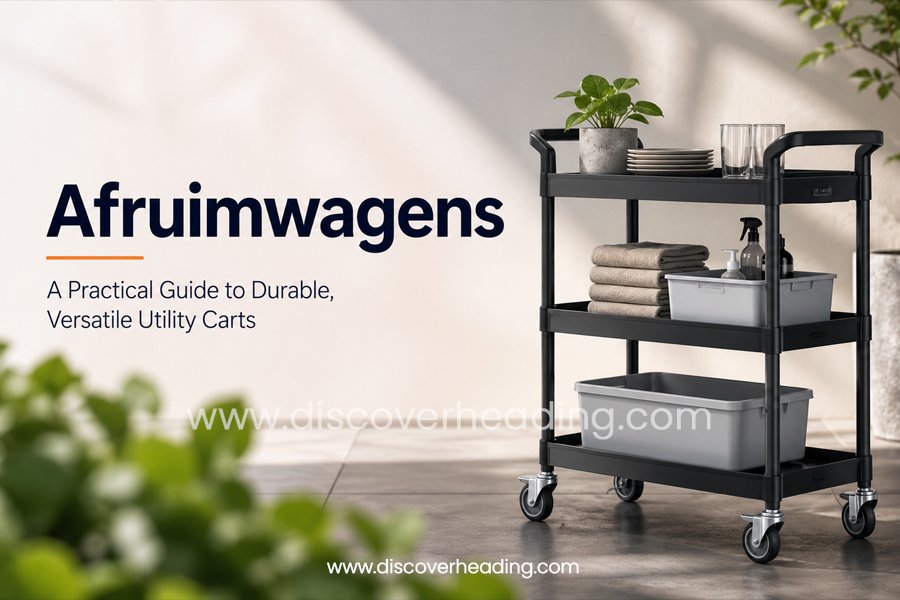
Search “afruimwagens” online and you’ll notice something odd pretty fast. A couple of sites call them farm wagons. One describes them, weirdly, as some kind of electric vehicle. Both are wrong, and honestly it’s not even close. So what is an afruimwagen, actually? It’s a rolling utility cart — the kind used to clear tables, haul supplies, and move stock — and that’s exactly what this guide is going to explain properly.
The word’s Dutch. Afruimen means “to clear away” — like clearing a table — and wagen just means cart or wagon. So an afruimwagen is, literally, a clearing cart. Nothing more mysterious than that. It’s the cart a waiter uses to clear a table full of dirty plates, or the one a hospital orderly pushes down a hallway loaded with linens, or the thing a warehouse worker uses to haul parts from one end of the floor to the other. Not glamorous. But if you’ve ever worked a busy dinner shift without an afruimwagen nearby, you know exactly why they matter.
Below, I’ll walk through what afruimwagens actually are, the different kinds you’ll come across, what makes one good versus one that falls apart in a year, and what’s worth checking before you buy.
What an Afruimwagen Actually Is
You’ll see the word spelled a few ways — afruimkar sometimes, or in English simply “bussing cart,” “clearing trolley,” “service cart.” All the same thing, really.
Strip an afruimwagen down and it’s a frame on wheels with a couple of shelves. That’s the whole concept. What changes is the material, how many shelves it has, and whether there’s a lid or bins attached, and all of that depends on the job it’s doing. For instance, a few things these carts get used for:
- Clearing plates and cutlery in restaurants and hotel dining rooms
- Hauling linens or waste through a hospital corridor
- Moving stock and tools around a warehouse
- Setting up and tearing down at catered events
Most afruimwagens are stainless steel, aluminum, or thick plastic, sitting on casters, sometimes with a handle bar welded on. Some have raised edges so things don’t slide off mid-push — a small detail, but if you’ve ever watched a stack of dishes slide off a cart onto tile, you’ll understand why someone bothered to add that.
The Main Types of Afruimwagens
Picking the wrong afruimwagen for the job is more common than you’d think, though it’s an easy mistake to avoid once you know what’s out there.
| Type | Best For | Frame Material | Typical Load |
|---|---|---|---|
| Stainless steel bussing cart | Restaurants, hotels, catering | Stainless steel | 100–250 kg |
| Plastic/polymer utility cart | Healthcare, cleaning, food prep | High-density polyethylene | 80–150 kg |
| Open-shelf industrial cart | Warehouses, manufacturing | Powder-coated steel or aluminum | 200–500 kg |
| Enclosed waste cart | Waste collection, back-of-house | Stainless steel or lidded plastic | 100–300 kg |
| Compact/folding cart | Tight kitchens, small spaces | Aluminum | 50–100 kg |
| Electric-assist cart | Large facilities, long distances | Steel with motorized base | 150–400 kg |
Overall, stainless steel wins out in most commercial kitchens, and it’s not just about looking clean on a stainless counter. It doesn’t rust, you can hose it down, and as a result it survives years of being banged into doorframes in a way painted steel just doesn’t. According to NSF International, stainless steel surfaces are also generally easier to validate against food-safety standards, which is one more reason it dominates the category.
What Separates a Good Afruimwagen From One That Doesn’t Last
Two carts can look nearly identical sitting in a supplier’s catalog. However, the difference usually shows up three or four months in, once one of them starts wobbling.
Frame thickness is usually where it starts. Thin sheet metal dents fast — anything under about 1.0mm stainless steel tends to warp under regular loading, and once it’s warped, the shelves don’t sit flat anymore.
Casters, meanwhile, are honestly where most cheap afruimwagens fail first, and it’s the part people notice least when buying. Swivel casters with brakes on at least two wheels aren’t optional in my opinion — picture a loaded cart rolling on its own down a slightly sloped, wet kitchen floor. That’s not a hypothetical; it happens, and it’s exactly the kind of slip-and-fall risk OSHA’s guidance on workplace ergonomics flags as preventable with the right equipment.
On top of that, here’s something that trips people up: a cart rated for 200 kg total doesn’t mean every shelf can hold 100 kg. So check the per-shelf number specifically, because it’s usually lower than you’d assume.
A few other things worth glancing at before buying an afruimwagen:
- Whether the shelves adjust or come out
- Raised edges to stop things sliding
- Handle height (nobody wants to hunch over a cart for eight hours)
- NSF or similar hygiene certification if it’s for food service
- Wheels that don’t squeal — sounds minor until you’re in a quiet hotel hallway at 2am
Where People Actually Use Afruimwagens
Hospitality is probably where you’ll see afruimwagens most — bussing tables, room service runs, setting up banquets. A cart that rolls smoothly and doesn’t tip when fully loaded genuinely speeds up a busy service. Anyone who’s worked front-of-house knows the difference a bad cart makes during a rush.
Hospitals, meanwhile, lean on enclosed or color-coded afruimwagens to keep linens, waste, and clean supplies from mixing — that’s not just tidiness, infection control rules usually require it.
Warehouses and factories use the heavier open-shelf type to move components short distances without pulling a forklift over for every small job. Similarly, cleaning crews use smaller, usually folding carts to carry supplies between floors.
And then there’s catering — off-site catering especially — which tends to favor the foldable afruimwagen, mostly because there’s never as much room in the van as anyone plans for.

Why It’s Worth Having an Afruimwagen
It’s easy to underrate how much a decent cart changes a shift. A few reasons afruimwagens earn their keep:
Fewer manual carries means fewer strained backs — that’s a real concern in hospitality and healthcare work, not just something written in a safety pamphlet nobody reads.
Also, one trip instead of three or four adds up fast, especially during a rush when every minute counts. Separate shelves, in turn, keep dirty, clean, and waste items apart, which matters more than people think until something goes wrong.
A solid stainless steel afruimwagen can outlast two or three cheap plastic ones — over a few years that ends up mattering more than the price tag on day one. And smooth, non-porous surfaces are just easier to keep clean than carrying things by hand or balancing them on whatever tray happens to be nearby.
Questions Worth Asking Before You Buy an Afruimwagen
What are you actually going to carry most — dishes, waste, tools, some mix? That decides open shelves versus something enclosed.
What’s the floor like? Rough or uneven surfaces need bigger casters, 100mm or more, otherwise you’ll spend the whole shift fighting the cart instead of pushing it.
Does it need to fit through doorways regularly? Measure the narrowest doorway, not the widest hallway — this gets overlooked constantly.
Wet or food-adjacent environment? Painted steel will eventually chip and rust, whereas stainless or food-grade plastic won’t.
How many people use it, and how roughly? Busier spots justify spending more on reinforced frames and sealed caster bearings. Finally, does it move between floors? If so, a foldable or stackable model saves storage space when it’s parked.
Keeping an Afruimwagen Running
These don’t need much upkeep, but skip the basics and they wear out faster than they should.
Wipe the shelves and frame down after each shift, especially anywhere food’s involved — buildup left overnight is harder to scrub off and, as a result, starts corrosion sooner than most people expect.
Check the wheels for debris once a month or so. A jammed caster makes the whole thing harder to push and wears the frame unevenly. Additionally, lubricate the axles and swivel joints every couple of months, and glance at the welds occasionally, particularly on carts that regularly get loaded near their limit — small cracks don’t usually announce themselves until they fail.
Finally, store the afruimwagen indoors when it’s not being used. Rust doesn’t care that the cart’s off the clock.
What Afruimwagens Cost
Pricing spreads out quite a bit depending on build quality and material.
Basic plastic afruimwagens sit at the low end — fine for light cleaning duty or a small kitchen that doesn’t need much. Standard stainless steel bussing carts, meanwhile, are the mid-range option, and honestly the most common pick for restaurants and hotels. Heavy-duty or electric-assist versions cost the most, since they’re really built for warehouses and bigger operations.
One thing worth factoring in beyond the sticker price: casters wear out first, always, so replacement cost matters. So does how long the frame and shelf warranty runs — over a few years, those two things tend to matter more than what you paid on day one.
Questions People Actually Ask About Afruimwagens
What does “afruimwagen” mean? Dutch for “clearing cart” — from afruimen (to clear away) and wagen (cart). A mobile utility cart used to collect and move items around a commercial space.
Is an afruimwagen basically a bussing cart? Yes, pretty much exactly that. In English hospitality contexts “bussing cart” or “service cart” means the same equipment.
What’s the best material for a food-service afruimwagen? Stainless steel, and it’s not close. It resists rust, handles constant washing, and meets hygiene standards more easily than painted steel ever does.
How much weight can an afruimwagen hold? Depends on the model. Light-duty ones handle 50–100 kg, standard hospitality carts run 100–250 kg, and heavy industrial versions go up to 500 kg. Always check the per-shelf number, not just the total.
Are afruimwagens only used in restaurants? Not even close — healthcare, manufacturing, warehousing, and cleaning crews all use some version, just built differently depending on the job.
What’s the actual maintenance routine for an afruimwagen? Wipe it down regularly, check the casters for debris, and lubricate every couple of months. Stainless steel needs the least babying of any material here.
Bottom Line
An afruimwagen is a simple piece of equipment when you get down to it, but the wrong one — flimsy casters, the wrong frame, a shape that doesn’t fit your space — turns into a small daily headache for whoever’s stuck pushing it around. So match the cart to the actual job, don’t cheap out on the casters, and keep up with the basic maintenance. Do that, and your afruimwagen will probably outlast half the other equipment in the building.
Stay ahead by staying connected with us for alerts and updates. Discover Heading!