
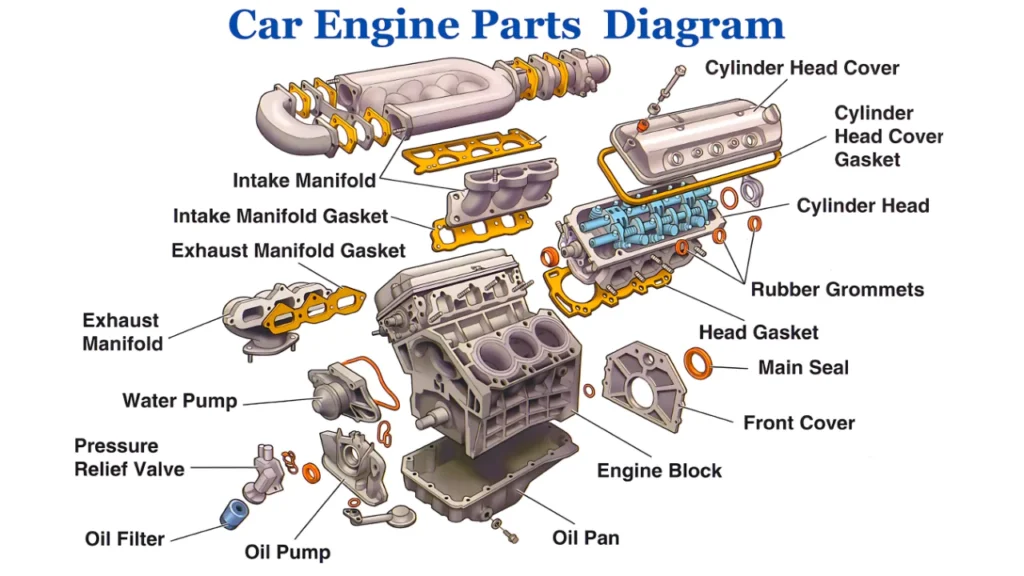
Your car’s engine is an intricate marvel of engineering, transforming fuel into the power that propels you down the road. Beneath the hood lies a carefully coordinated system of parts, each performing a critical function to keep your vehicle running smoothly. Whether you’re a new driver, a DIY enthusiast, or just curious about what makes your car tick, understanding the essential components of your engine can help you appreciate its complexity and maintain it better. Let’s break down the main parts that make your engine come to life.
1. The Engine Block: The Heart of It All
At the center of every car engine is the engine block, often referred to as the heart of the machine. Typically made of aluminum or cast iron, the engine block houses several cylinders where fuel combustion occurs. Inside these cylinders, the pistons move up and down, converting the energy from burning fuel into mechanical motion.
The block also contains passageways for coolant and oil, ensuring proper temperature regulation and lubrication. Without this foundation, the rest of the engine’s components couldn’t function together efficiently.
2. Pistons and Connecting Rods: The Power Movers
Inside the engine block are pistons, which are responsible for transforming the energy from fuel combustion into motion. Each piston connects to a connecting rod, which links it to the crankshaft. As the air-fuel mixture ignites, it creates a small explosion that pushes the piston downward.
This up-and-down motion of the pistons translates into rotational motion through the crankshaft—essentially turning linear force into the spinning energy that powers your wheels. The precise timing and movement of these components are crucial to maintaining engine balance and efficiency.
3. The Crankshaft: Converting Energy to Motion
The crankshaft is one of the most vital components in your engine. It takes the linear motion of the pistons and converts it into rotational motion, which ultimately turns your car’s wheels through the transmission system.
To ensure smooth operation, the crankshaft is equipped with counterweights and bearings that reduce vibration and friction. It’s synchronized with the camshaft using a timing belt or chain, ensuring the valves open and close at precisely the right moments.
4. The Camshaft and Valves: Timing Is Everything
If the crankshaft controls movement, the camshaft controls timing. The camshaft manages the valves, which regulate airflow into and out of the engine’s cylinders. As the camshaft rotates, its lobes push the valves open and closed in a precise rhythm, allowing the air-fuel mixture to enter and exhaust gases to exit.
Modern engines often use variable valve timing (VVT) systems, which adjust this timing automatically to improve efficiency and performance at different speeds. Proper valve timing ensures your engine breathes efficiently, which directly impacts power and fuel economy.
5. The Cylinder Head: Where the Magic Happens
Mounted atop the engine block, the cylinder head houses critical components such as the valves, spark plugs, and part of the combustion chamber. It’s sealed to the block with a head gasket, preventing coolant, oil, and combustion gases from leaking.
The cylinder head also plays a key role in airflow. It’s designed with precise channels that allow the air-fuel mixture to enter the cylinders and exhaust gases to exit efficiently. A well-maintained cylinder head ensures proper compression and combustion—essential for power and fuel efficiency.
6. The Timing Belt or Chain: Keeping Everything in Sync
Your engine’s timing belt or chain ensures that the crankshaft and camshaft move in perfect harmony. This synchronization allows the valves to open and close at the exact right time during the piston’s movement.
A worn or broken timing belt can cause catastrophic engine damage, as pistons may collide with valves. That’s why regular replacement according to your manufacturer’s recommendations is critical for engine health.
7. The Fuel and Ignition Systems: Powering the Combustion
No engine can function without a reliable fuel system and ignition system. The fuel system delivers gasoline to the engine, where it mixes with air to create a combustible blend. Components like the fuel injectors ensure precise delivery and atomization of fuel.
Meanwhile, the ignition system—comprising the spark plugs, ignition coils, and related wiring—creates the spark that ignites the air-fuel mixture. This controlled explosion drives the pistons downward, setting the entire power cycle in motion.
8. The Lubrication and Cooling Systems: Protecting the Engine
Engines generate intense heat and friction, making proper lubrication and cooling vital. The oil pump circulates motor oil throughout the engine, reducing friction between moving parts and preventing premature wear.
Simultaneously, the cooling system—featuring the radiator, water pump, and thermostat—regulates temperature by circulating coolant. Without effective cooling, engines can overheat, leading to serious damage or even failure.
Final Thoughts: Respect the Engine, Respect the Machine
Your car’s engine is a true masterpiece of mechanical engineering, with every component—from pistons to valves—working in perfect synchronization. Gaining a deeper understanding of these essential parts not only enhances your appreciation for the technology under the hood but also equips you to maintain it more effectively.
Routine care, including regular oil changes, timely belt replacements, and proper cooling system maintenance, plays a crucial role in keeping your engine in peak condition. Precision-engineered components, often produced through advanced manufacturing methods such as CNC grinding services, ensure that each part performs flawlessly. When you invest in quality upkeep and precision workmanship, your engine rewards you with dependable performance, smooth operation, and years of reliable driving.
Keep an eye for more latest news & updates on Discover Heading!