

The cloud computing environment continues to evolve rapidly, shaping how businesses manage data, applications, and IT infrastructure. Advances in automation, artificial intelligence, and edge computing are transforming the cloud into a more intelligent and adaptable platform. Organizations are increasingly seeking flexible solutions that allow for seamless scaling, improved performance, and enhanced security, reflecting the growing importance of cloud services in supporting digital transformation initiatives across industries.
As companies navigate this shifting landscape, providers like CIO Solutions help organizations adopt and optimize cloud technologies efficiently. Trends such as multi-cloud strategies, serverless architectures, and enhanced data analytics are expected to redefine operational efficiency and innovation. Understanding these developments allows businesses to make informed decisions, ensuring that cloud investments align with long-term goals while remaining resilient to technological change and evolving market demands.
Artificial Intelligence Integration
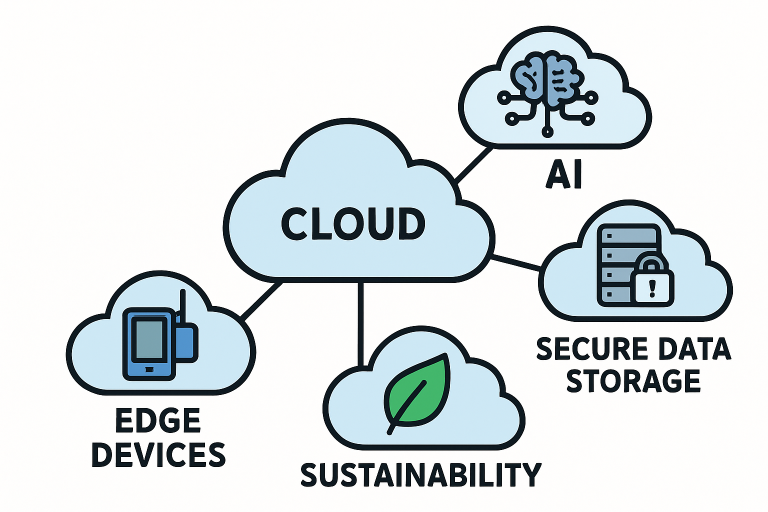
Artificial Intelligence is poised to become a core component of nearly every cloud platform. AI-driven automation is streamlining cloud operations by simplifying everything from onboarding new users to detecting and resolving security issues in real-time. With integrated AI, companies can leverage powerful predictive analytics to proactively manage resources and monitor workloads. This not only drives efficiency and productivity but also empowers teams to make high-impact, data-driven decisions. Businesses that integrate AI with cloud platforms experience faster project completion and more agile responses to market demands.
Hybrid and Multi-Cloud Strategies
More organizations are deploying hybrid and multi-cloud environments to capitalize on the unique strengths of diverse platforms. A hybrid approach allows businesses to blend public and private clouds, supporting varied workload requirements while maintaining full control over sensitive data. Multi-cloud strategies, on the other hand, involve using two or more public cloud providers to avoid vendor lock-in and maximize flexibility. These approaches optimize costs, boost operational continuity, and minimize the risks associated with isolated cloud systems. By strategically distributing applications across multiple providers, organizations also enhance disaster recovery and meet more stringent regulatory requirements.
Edge Computing
Edge computing represents a groundbreaking extension to traditional cloud models by processing data closer to the source. In industries such as healthcare, manufacturing, or autonomous vehicles, milliseconds can make the difference between success and failure. Processing data at the edge significantly lowers latency and bandwidth consumption, unlocking the potential for real-time analytics and improved user experiences. Businesses that adopt edge computing with cloud services benefit from responsive applications and stronger privacy controls, a trend expected to accelerate as the Internet of Things (IoT) and 5G technologies expand.
Sustainability Initiatives
Sustainability has become a strategic imperative for both cloud providers and customers. Major cloud vendors are heavily investing in energy-efficient technologies; they are redesigning data centers and sourcing renewable energy to power their infrastructure. Committing to lower carbon emissions and greener cloud operations reflects not only regulatory compliance but also the increasing demand from customers and investors for responsible business practices. Leading cloud platforms now offer dedicated tools to help organizations track and manage their digital carbon footprints, further supporting efforts to align with global climate goals. Sustainable transformation in the cloud is becoming a competitive differentiator across industries.
Digital Sovereignty
As technology crosses borders, concerns about digital sovereignty are coming to the forefront. Data privacy regulations such as the European Union’s GDPR and California’s CCPA are influencing how organizations architect their cloud deployments. Businesses now look for cloud solutions that guarantee data storage and processing remain within specific geographic regions to comply with regional laws and bolster customer trust. Ensuring digital sovereignty provides organizations with greater transparency, control, and security while enabling them to meet diverse compliance standards worldwide. Cloud providers are responding with localized offerings and advanced compliance certifications to cater to the evolving needs of global customers.
Conclusion
The future of cloud services is defined by smarter automation, adaptable infrastructure choices, integrated edge processing, sustainability leadership, and robust digital sovereignty. Organizations need to invest in knowledge and agile solutions to remain competitive as cloud technologies continue to evolve. Those who are proactive in embracing these advancements and adapting their strategies will not only maximize the benefits of their cloud investments but also ensure their data remains secure, their operations are efficient, and their businesses are ready to meet tomorrow’s challenges.
Keep an eye for more latest news & updates on Discover Heading!